Fantasy

Home Fantasy
Thoughts on the craft of writing fantasy and fantasy gaming, from building believable worlds to telling stories that keep readers turning pages.

A comparison Between 5e D&D and OSR

The Dungeons & Dragons old-school renaissance (OSR) has gotten a lot of steam in the past few years, almost to the point of it being a fashion statement. And lets not forget the huge impact 5th edition had making the D&D hobby popular again, in some ways bringing it back from the dead (D&D was never dead but it definitely had a long lull in popularity). The latest edition, 2024, has apparently been the fastest-selling D&D rule book of all time.
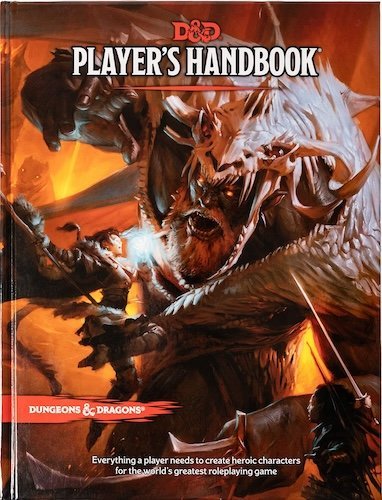
5e Players Handbook
5e Players Handbook

The hit Netflix show, Stranger Things, helped bring D&D back into the popular lexicon. When celebrities came out of the nerd closet to reveal they were huge fans of the game (Vin Diesel, Stephen Colbert, etc.) D&D became cool again.

Fifth edition (5e) brought in a lot of money for its publisher Wizards of the Coast and its parent company Hasbro. Many people new to the game got their first exposure to the game around a table, both in person and virtual, playing fifth edition rules.

The old grognards busted out their nostalgic rule books from the late 70s and early 80’s to boldly declare on social media and YouTube, “I’ve loved this game since before it was cool.”

Almost as a rebellion against the new kids’ game, the old rules saw a resurgence. New companies producing modern printings of those old rules like Old-School Essentials and OSRIC got traction and attention. You could get your hand on the ancient way of playing without having to pay several hundred dollars for a dog-eared and battered AD&D Players Handbook or Dungeon Masters Guide circa 1980.

Regardless of the version of rules you play, it’s still D&D. But that comparison is a bit like saying lasagna and sushi are both food. It’s a true statement but the differences really matter to the experience you have.

Now that both current and old-school versions of the D&D game are available (a great thing!) which do you choose? If you’ve played both, or ran both old and new versions of D&D as a Dungeon Master, you’ve already formed a preference. For those who have only played 5e but keep hearing about this “old-school renaissance” the grognards keep talking about, how do you figure out which edition is more fun to play?

What if you’ve been playing AD&D since 1980 and have never sat at a 5e table?

Best vs Most Fun to Play

Like comparing vanilla ice cream to chocolate, it’s best not to discern which is best. Instead, which do you enjoy the most? It’s a subjective comparison and will be unique to every individual.
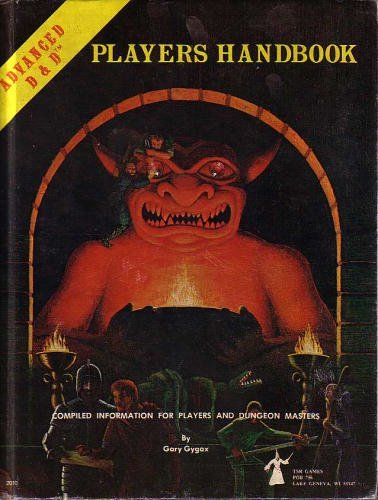
AD&D Players Handbook
AD&D (OSR) Players Handbook

Comparing editions or rules-sets of Dungeons & Dragons is the same way. There are functional differences but deciding which to play is a subjective opinion determined by the individual. What’s vanilla to you may be chocolate to someone else.

Instead of analyzing data and making an algebraic determination of which is best between old-school rules and the 5e set, we’re going to describe the functional differences and let that guide you to a personal and subjective opinion of which seems more fun to play.

For the sake of this article, we’re going to use 5e to refer to the current set of rules being produced by Wizards of the Coast (WotC), and OSR to refer to the collective set of rules produced by TSR, the original creators of D&D, even if they are currently printed by modern publishers (like Necrotic Gnome).

There was Advanced Dungeons & Dragons (AD&D) or as many people refer to it as 1e for first edition (which isn’t technically correct; it wasn’t the first but was preceded by Original Dungeons & Dragons). There was Basic/Expert; and there was BECMI, which was a collection of Basic, Expert, Companion, Master and Immortal rules.

In this article, we’re going to focus on the collection of AD&D since that’s the closest analog to today’s official 5e rules set.

Key Differences

There are some big differences between OSR and 5e, and some subtle ones. Perhaps the most obvious difference to anyone playing both is character creation and the range of class and race options.

Classes and Races

In the Basic rules, you could choose between cleric, fighter, magic user and thief. All were human. You could also play a dwarf, elf or halfling. These were races but they were also their own class (“race-as-class” as it was called). You weren’t a dwarf fighter, you were just a dwarf, for instance.
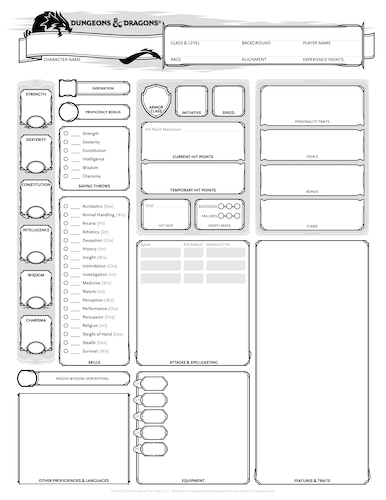
5e Character Sheet
5e Character sheet

In AD&D, there was no race-as-class. You chose your race (human, elf, dwarf, halfling, half-elf, gnome and half-orc), and your class (cleric, druid, fighter, ranger, paladin, magic user, illusionist, thief, assassin or monk). Some races were limited to which class they could be, or the maximum level they could attain.

In 5e, like AD&D, there is no race-as-class, but the variety of races and classes is expanded. There are humans, of course, as well as dwarves, elves, halflings, dragonborn, gnomes, half-elves, half-orcs and tieflings.

Available 5e classes are barbarian, bard, cleric, druid, fighter, monk, paladin, ranger, rogue (thief renamed), sorcerer, warlock and wizard.

The limitations that determine which class each race can choose from were lifted in 5e; each race can be any class.

Experience

One of the most impactful and noticeable differences between OSR and 5e is experience and character advancement.

In OSR, a fighter must gain 2,000 experience points to go from 1st to 2nd level. In 5e, that same fighter need only gain 300 XP to reach 2nd level.

This means a 1st level OSR fighter would have to kill 400 goblins (at 5 XP each) to go up a level, while a 1st level fighter playing 5e rules would only have to kill 6 goblins (50 XP each).

For players used to 5e rules that play an OSR game, this slow advancement can feel almost insurmountable. But, OSR games grant experience for treasure gained. In fact, on average, 75% of an OSR character’s experience points come from treasure gained (1 XP for each 1 gold piece value of treasure). It still takes longer to advance in levels in OSR compared to 5e, but it’s not as slow as many players new to OSR think.

Another difference, and one that simplified things for 5e players, is that all character classes use the same experience/level advancement table. Regardless of class, all 5e characters need 300 XP to go from 1st to 2nd level. In OSR, however, each class has its own experience/level advancement table. For instance, OSR fighters need 2,000 XP to reach 2nd level, magic users need 2,500 but thieves only need 1,250.

In summary, if you are a player who values rapid character advancement and enjoy choosing a broader range of race and class combinations, 5e provides that.

Abilities, Modifiers and Saving Throws

In all editions of D&D, characters still have the same basic ability scores of strength, dexterity, intelligence, wisdom, constitution and charisma. These values range from a low of 3 to a high of 18. But the way those abilities are used is rather different between OSR and 5e.

AD&D Character Sheet

A quick glance at a typical OSR character sheet tells you that these abilities have very few bonuses or modifiers to character activities. Strength gives a plus or minus to the character’s damage done in melee combat, and Dexterity modifies the ability to hit in ranged attacks and to armor class. But that’s about it.

A 5e character sheet has many modifiers that stem from the six basic abilities. Modifiers play such a big role in how a 5e character is played that your modifiers are often referred to more than the score from which they are derived.

For instance, your 5e character’s Dexterity modifier determines your ability to roll Acrobatics, Sleight of Hand, and Stealth checks. Your Intelligence modifier determines your ability to roll Arcana, History, Investigation, Nature or Religion checks.

Saving throws are completely different in OSR and 5e. In OSR, they are Death/poison, Wands, Paralysis/petrification, Breath weapons, and Spells/rods/staves.

5e saving throws are based on the same six abilities of Strength, Dexterity, Constitution, Intelligence, Wisdom and Charisma (5e lists these in a different order than in OSR).

5e Character Sheet
5e Character Sheet

Saving throws in 5e and OSR are used much in the same manner during game play but are derived in a different way.

Checks

Everything in 5e is a check of one thing or another. “Roll a perception check,” is perhaps one of the most common things a DM will say to their players around a 5th edition game table.

All checks in 5e are a roll of a d20 against some target value called a DC, or difficulty class. This is where all those character ability modifiers come into play. The DM determines the target value the character must meet or exceed (higher is harder), the character rolls a d20 and adds (or subtracts) their modifier from their roll, and success or failure is determined.

In OSR, there are a few checks that take place, like looking for traps or listening at doors, but these tend to use d6 or percentile (d100) dice, and are often unique to the particular character class. For instance, Thieves roll to see if they are able to unlock a locked chest using their thieves tools, but other classes are not allowed to even try.

Further, in OSR, it is up to the players to declare that their character is searching for traps. In 5e, many of these activities are passively determined by the DM (or the player) rolling a “passive perception” check. They roll a d20 and the dice determines if they spot something whether they declared they were searching for it or not.

In this way, 5e focuses more on the numbers and stats of your character sheet whereas OSR relies more on the player making choices and the DM adjudicating the results based on the circumstances.

(Rolling d20 to determine results is far more common in 5e than it is in OSR games.)

In summary, the numbers and stats of your 5e character sheet play a much larger role in your success during the game, whereas the grey matter between your ears is your most important asset during an OSR game.

Monsters

Combat and fighting monsters is a common game activity for all editions of Dungeons and Dragons. The monsters are presented in the Monster Manual, and stats follow a similar format. Experience is granted to characters for defeating monsters, whether that be through death in combat, subdual, or some other definition.

However, 5e took a step toward making the classification of monster difficulty easier compared to OSR. Every monster has a CR, or challenge rating. The higher the CR, the more difficult the monster is to overcome.

The character never actually rolls against the monster’s CR, however. The CR for a monster is a guide the DM uses to determine relative difficulty when planning an encounter. A monster’s CR also determines the experience points awarded to the party when that monster is overcome.

As stated previously, monsters in 5e grant more experience points when overcome than they did in OSR. For instance, defeating a 5e goblin awards 50 XP while defeating that same goblin in OSR only awards 5 XP.

Some monsters are dramatically more difficult between editions. Comparing dragons of the same age, they are a bit easier to kill in 5e games than they are in OSR, yet vampires are more challenging in 5e.

Another interesting difference is that some monsters in OSR editions like giant spiders can kill a character of any level if that character fails their poison saving throw. In 5e, poison often just makes the character nauseous for a few rounds but they can still fight (with some minor penalties).

Because OSR grants experience for treasure gained, it is not uncommon for experienced OSR players to focus more on circumventing monsters in favor of getting their treasure rather than fighting them head-on. This is an example of how the edition of D&D you play will influence how you play the game and which edition appeals to you more.

Finally, the standard Monster Manual for 5e has a lot more monsters than the original OSR Monster Manual (AD&D).

Death

When it comes to handling character death, there is a small difference between the Basic/Expert rules of the early 1980s and its contemporary AD&D rules. In B/X, a character dies when they reach 0 hit points, period. Done.

In AD&D, the character falls unconscious at 0 hits points, and loses one additional hit point (into negative territory) each round. Receiving first aid brings them back from the brink. If they reach -10, they’re dead.

5e makes it easier to stay alive. When the character reaches 0 hit points, they fall unconscious and must start rolling Death Saving Throws. These are a series of 50/50 chance rolls using a d20, one per round. If they roll a 10 or higher, they get a +1. If they roll a 9 or lower, they get a -1. If they accumulate +3, they are alive (“stable”) but unconscious and no longer need to make Death Saving Throws. If they get to -3, they are dead.

[Rolling a natural 20 counts as +2 instead of +1. Rolling a natural 1 counts as -2 instead of -1.]

While a character is in 0 hit point territory, another member of the party can provide first aid. They would roll a “Medicine check” (based on their Wisdom modifier), and if successful, the dying character would become stabilized and no longer have to roll Death Saving Throws (unless the unconscious character receives more damage during the combat).

Many players who switch from OSR to 5e remark at how easy it is for their characters to stay alive in 5e. Conversely, many players who switch from 5e to OSR note how easy it seems for their character to die.

Bigger Picture

There are many subjective opinions about the differences between OSR and 5e, and all of them are valid. Like vanilla vs chocolate, it’s a matter of personal preference. Some broad observations can still be drawn that provide objective-level insight to help the player curious about playing a different edition.

It has been observed by many that 5e feels more like you are role playing super heroes in a fantasy setting. The abilities and capabilities of 5e characters starts at an impressive level and rapidly goes up from there.

Generating new characters and then managing how they advance in 5e is substantially more complex than OSR. But, many players like that flexibility and wide range of start and upgrade paths.

Conversely, OSR has a bit more of a gritty feeling to it, as if a farmer finds a sword and a suit of leather armor — barely above his contemporaries in ability — and goes forth in a hard-scrabble effort to eek out whatever treasure they can while having to play as smart as possible to stay alive.

Depending on your individual perspective and tastes, OSR might be the most fun you ever had or a nightmare. 5e might be a huge source of enjoyment or it may feel like you’re playing a video game in god mode where everyone gets a prize at the end and dying is of little risk or no big deal if it happens (i.e., no challenge).

5e, considering that it is the current edition being produced by the official owners of the D&D intellectual property, has the advantage of ubiquity. They have a huge variety of products to buy that are in current production.

If you want to play OSR rules, you either need to find the original rule books on the used market (sometimes at surprisingly high prices), or rely on a quality but relatively small group of vendors currently producing their own versions of the rules (like Necrotic Gnome).

This brings up an important point about rules. Games and the rules for how to play them are not protected by copyrights or trademarks. The expression of those rules are.

For instance, nobody owns the rules to poker, but if you write a book about how to play the game, nobody can reproduce your book without your permission.

This is how companies competing with WotC can sell books with 5e rules in them. The rules are the same — how does a DC work, how difficult is a vampire to kill, what does a passive perception check do, etc. — but the expression of those rules must be unique to each publisher (i.e., they can’t plagiarize each other).

If you want to play 5e rules but don’t want to buy books or materials produced by Wizards of the Coast, there are quality 3rd party vendors that sell them.

The same goes for old-school edition rules. TSR no longer exists and WotC doesn’t sell old-school rule books, but there are quality 3rd party vendors that do (Necrotic Gnome, as we’ve mentioned a few times already in this article).

There are people who enjoy playing both OSR and 5e rules D&D games. Some switch from one to the other (and back again) based on their mood or even the availability of other players or Dungeon Masters.

Some pick one and stick with it. Some people are downright fanatic about which rules set is best.

There is no right or wrong, just which is right for you. Being informed by guides like this one about the differences between editions can help you decide which to pursue.

The recommendation of this author is to try each (or any editions in between). Sometimes the most important differences between rules-sets can’t be coldly charted, but must be experienced to truly decide if the flavor and atmosphere of a particular edition provides the most enjoyment to you.

I wrote a book. Now what?

How it Started

One early Sunday morning back in 2011, I was sipping a cup of coffee, the house was quiet, and I was bored. I’ve always enjoyed creative writing and had the idea to create a fantasy story purely for the enjoyment of writing it. Dungeons & Dragons played a big role in my life from grade school until I was a young man, so the fantasy genre had a special place in my heart. I decided I’d write something involving orcs and axes, a story I would want to read.

With no plan, I began to write about a man that was really good with a bow and had a particular hatred for an orc-like creature. The first page involved an encounter between the man and a cru’gan, and the man won. I kept writing. By breakfast time, I had written an entire chapter and I loved every minute of it. I spent the next several weekends putting pen to virtual paper and I found myself becoming engrossed in my own story as it unfolded. I wanted to see where it went and before I knew it I had produced three chapters.

For some reason, I stopped. I saved my work but didn’t touch it for another two years. Occasionally I’d go back and read those first three chapters and each time I’d come away thinking, “That was very engaging. I wonder what happens next?” For some reason, other things kept me from writing more.

At some point I was talking with a friend about my unfinished story. Intrigued, he asked to read what I had completed so far. A day later he came back to me encouraging me — nay, admonishing — to keep going, to make it into a full-length book. Bolstered by my friend’s enthusiasm, I decided to make it a formal effort.

I was going to write a book.

Writing the Book

Three months after that, I had finished the rough draft of my first novel, 64,000 words. I had no formal plan beyond that, however, and I found myself saying, “I’ve written a novel. Now what?”

Up to this point, I had no long-term goals. I simply wanted to write a book, a story that I would be eager to read. When it was completed, I felt very excited and had a big sense of accomplishment. It wasn’t an easy task, but I had enjoyed the process. My friend said, “You’re going to get it published, right?”

Being an unknown writer with zero industry contacts, I had no delusions that I would be able to quit my day job and become the next J.K. Rowling or Stephen King. There would be no publishing deals coming my way. It didn’t take long to figure out that I could publish the book myself in electronic format. Even though I could become my own publisher, I still knew I’d have to take the effort seriously.

Editing and Publishing

I purchased and read a couple of books that really laid bare the gritty truth of self-publishing. One was Writing Worth Reading by Nancy Huddleston Packer and John Timpane. The other was The Guide to Writing Fantasy and Science Fiction by Philip Athans. The former was about writing, the latter was about writing and publishing in the fantasy and science fiction genres. Both books were brutal in their honesty, and were exactly what I needed to hear.

My first thought was that I had already done the hard part, writing the book itself, and that the rest would be relatively easy. Boy, was I wrong. It became painfully clear that I was unable to proofread or edit my own work. That meant hiring someone else to do it for me. I made the mistake of thinking that a person who reads a lot would make a good editor. Wrong! I hired someone I knew personally that reads voraciously. Although they were inexpensive and they worked quickly, their lack of qualifications made the effort a waste of money and time.

I also had to hire a graphic designer to create my cover and the world map that went along with the story. This was money well spent, and the designer I hired was a joy to work with. The value of the world map was questionable, however, as it doesn’t seem to work well with e-books.

At this point, the editing and subsequent re-reads ate up more than six months. It took a month for the graphic work, too. Between those two individuals, I had spent nearly $1,000 of my own money on a book that had little prospects of ever making a profit. By the time I ended up with a proofed, edited, finalized manuscript, the actual writing of the book ended up being only 25% of the overall effort. Writing a book is easy. Editing and publishing a book is hard.

Book 1: Ohlen's Arrow
Book 1: Ohlen’s Arrow

Jump ahead to late May, 2013. I managed to get my e-book added to Amazon.com for Kindle and to Barnes & Noble for Nook. I even sold a few copies, enough to recoup nearly $29 of my $1,000 investment. During my initial writing phase, I had gotten in touch with author Michael J. Sullivan and we had several email exchanges about the process. He gave me a lot of great advice that helped me write a better story. He read a few chapters of my finished book and gave me some feedback that was extremely valuable and to the point, and the point was: I should strongly consider taking my book off the shelves and making some changes. This was frustrating, but I knew he was right.

I made the tough decision to pull my book and revise it. I spent another month making changes based on the feedback I’d received. This meant I needed another round of editing, and I knew an amateur, no matter how smart and well-read, wouldn’t cut it.

I ended up hiring someone that works as an editor for a scholastic publishing company, and despite knowing them personally, I had to pay industry rates (she charged me $4.50 per page) — another $1,000 out-of-pocket. Hiring a professional editor was a great idea, and the person I chose was very good at their job. But they had zero experience editing in the fantasy and science fiction genre and apparently had never read any of it before, either. Although my editor was very skilled and qualified, in hindsight, I should have hired someone with experience in my genre.

Jump ahead to late August, 2013. I had implemented 99% of my editor’s proposed revisions and proofread my book cover to cover. By this point I had read and re-read my book all the way through at least thirty times. It is an engaging story with a lot of action (it has been described as “If John Wick was a Viking“), so despite the repeat performances, it continued to maintain my attention. I re-posted the revised manuscript to Amazon and Barnes & Noble, and made it available for sale once again (this time I dropped the price from $3.99 to $2.99 per copy).

That’s not the end of the story, so to speak. At this point, I’d written a novel and published it. I now had to sell it. I became an author, then I became a publisher. Now I had to become a salesman and marketer. As most aspiring authors soon discover, this can be the most difficult role to fill.

Then Comes the Hard Part

How do you market your own book? You can’t go door to door. Simply publishing it doesn’t make it sell, even if it’s on the e-shelves of giant retailers like Amazon.com. This is where social media comes in. Facebook, Twitter, and blogs are very cheap and relatively effective at getting initial buzz going. They won’t make me rich, but they at least get my book in the hands of friends and colleagues, who can then post reviews. Reviews generate further sales. I don’t have a marketing budget like traditional publishing deals sometimes provide, but I’m not planning on making a living off my book, either, so my expectations are relatively low. In fact, all I need to consider this effort a success is to break even on my out-of-pocket expenses.

If you want to become an author and write a book, be aware that there is a lot more to it than putting words to paper. The actual writing is just one of four phases, and in many ways I think it is the easiest part. Editing, publishing, and especially marketing, can be far more daunting.

It gets even better. Many believe the best way to market one book is to write another. So I did.

Can you turn a D&D game into a novel?

“Against the Giants” (G1-3, TSR) is one of the best-rated and most-beloved modules from the AD&D era. In fact, it was written before the release of the original three core rule books. It is challenging yet rewarding and requires players to be at the top of their game (pun intended) to survive.

Then TSR allowed it to be turned into a novel and it was a miserable flop.

I have met several dungeon masters who shared a desire to turn one of their D&D campaigns into a fantasy novel. None ever got that far (writing a book is hard) and based on the track record of others who have, it’s probably a good thing they never took their effort far enough to be published.

“Just because each of them tastes good doesn’t mean you should put Hershey Kisses on a pepperoni pizza.”

The premise seems sound on the surface. A D&D game plays out similar to a fantasy novel. It can have all the necessary ingredients: risk and reward, character development, amazing scenery, dangerous villains, and heroic main characters. Even the side characters (NPCs) can lend some appreciated depth and flair to the story as it unfolds.

Why can’t you take the transcript of a D&D campaign and turn that into a fantasy novel?

Like putting chocolate on pizza, it’s a good idea in theory but rarely (if ever) a good idea in practice.

This is because what happens in a D&D game isn’t planned nor will it likely follow the standard kind of flow and plot points most people implicitly expect to find in a well-crafted fantasy novel.

Writing a novel is a different skill and craft than running or playing in a fantasy role-playing game.

There is one caveat to all this. What happens around a D&D gaming table can provide a treasure trove of inspiration for memorable action and even dialogue. Character names and personalities can come out from players who really get into their role. Even NPCs can provide inspiration for side characters that appear in a fantasy novel.

Ensuring the characters have the desired (and implicitly expected) struggles and development throughout the story requires understanding how to write far more than understanding how to game.

There is an integration or connection of sorts between my fourth novel, A Riddle of Scars, and my D&D game. Back in 2019, I came up with the story idea for my book, then decided to play-test it within the game of Dungeons & Dragons.

I converted my book’s plot into a campaign and ran it with a half dozen experienced players. These players knew that I was play-testing my book idea but were warned that what stayed in the book’s plot was still to be determined solely by me.

You’ll note that I already had the book idea first before introducing it to the D&D game. Doing it the other way around is what this article is all about — and is where my warning comes in. Don’t do it.

In the end, what ended up in the book was essentially the same as the original plot idea I created. Play testing it within the game of D&D didn’t change anything substantial. However, I did introduce a new character to the book based on one of the player characters (with the player’s full permission, of course). Other than that, the book’s plot survived being run as a D&D campaign, and according to the players, the campaign itself was immensely enjoyable.

Having gone through that experience and given it a lot of thought, I think it’s a fun source of inspiration to take a book’s plot and base a D&D campaign around it. Conversely, I’ve run many campaigns throughout my career as a dungeon master and none of them would make for a good fantasy novel. I’ve gotten tidbits of inspiration from the game, and as mentioned a great character idea, but the plot and sequence of what happens doesn’t translate very well from game to book.

Time Keeps On Slippin’ Slippin’

Writing in a notebook

Do you have Steve Miller stuck in your head now? Sorry.

I look at the calendar and see that it’s October 14th and feel blown away by how quickly the last two months have gone by. I think September only had 17 days in it.

Since August I have spent most afternoons practicing guitar, keyboard, bass and drums. I’m learning all four instruments with the goal of writing music inspired by my first novel, Ohlen’s Arrow. That is going well but except for savants, learning to play and compose music is not an overnight endeavor. I’ve played all these instruments in the past, so fortunately I’m not starting from ground zero, but I still have a long way to go.

I’ve also been thinking about continuing my Taesia series of novels. The next step would be to write book 5. I already have the bulk of the plot figured out, but haven’t formally nailed down the outline. An avid reader of mine recently shared their view that I really need to keep writing and continue the story. We’ll see.

Currently I’m reading Red Storm Rising by Tom Clancy. Although it’s a real page turner, I’m struck by how expository Clancy is. The old maxim, “Show me, don’t tell me” is one Clancy apparently never heard. Unlike popular belief, rules are not made to be broken but you certainly can if you know about them and have a good reason. In Clancy’s case, this book wouldn’t work without all the ‘tell me’ expository text.

In the cycling part of my life, I recently purchased a Wahoo KICKR Core smart trainer. I previously had a traditional spin bike but sold it as it was uncomfortable and had very poor ergonomics. The smart trainer will be hooked up to Zwift for a virtual riding experience. I may write a review after I’ve used it a bit. It will be nice to train on my own bike (Trek Domane AL5) rather than a rigid and poor substitution like a spin bike.

Where it All Started

Book 1: Ohlen's Arrow

Thwip.

The arrow sank deep into the creature’s throat and it fell backwards in a spray of blood, twitching and clawing at the wooden shaft protruding from its severed windpipe. The man lowered his bow and crouched behind the bushes in case there were others. He watched and listened to see if he had stumbled upon a lone cru’gan or if it had been part of a patrol. The only sound was the wet gurgling coming from the cru’gan’s throat. Soon it lay still and silent, and the only thing the man could hear was the evening breeze through the pine trees.

After several minutes passed, he retrieved his arrow and quickly searched the beast’s body, then rolled it out of sight under a pile of briars. He kicked dust over the creature’s blood, and then moved silently away into the forest amidst the diminishing evening light.


This is where it all started. The above excerpt is the opening paragraphs of my first novel, Ohlen’s Arrow. What does it say about an author who’s first word of their first book is “thwip“?

My intention was to create an instant sense of action and a feeling of mystery about the main character that compels the reader to continue the story. There’s nothing I’ve written that has been worked and re-worked more than that opening section, and in many ways, it is the work I’m most proud of.

I encourage you to read Ohlen’s Arrow and learn the rest of the story. It is my hope that it engages your attention and carries you captivatingly forward.

For Kindle and paperback editions of my books, visit my Books page.

And So It Begins… Part 5

New Book
I am beginning another book

I have begun work on my fifth novel.

That is a phrase I never anticipated uttering until recently. I’ve always wanted to be an author, even when I was a kid. But it had been a sort of lofty dream without real expectations, kind of like hoping to win the lottery or being able to fly like Superman.

That dream came true, though. And it wasn’t that difficult, either. How?

“Putting a man on the moon wasn’t a miracle, we just decided to go.”

Tom Hanks

Me writing a novel — or five — wasn’t a miracle, either. I just decided to do it.

This fifth book continues my Taesia series. As a reminder, my vision is to write nine books, all connected, in the form of three trilogies. The first trilogy, The Taesian Chronicles, is completed. This new book will be the second book in the second trilogy (“The Pillars of Taesia”).

Confused?

Don’t. Just read the books in order and you’ll be fine.

My goal is to get this book completed and available for sale by summer of 2020. Stay tuned.

New book: A Riddle of Scars

Book 4: A Riddle of Scars

I am very happy to announce the availability of my fourth novel, A Riddle of Scars. It is sold exclusively through Amazon in paperback, and coming soon, Kindle format. This is book one of a new trilogy, The Pillars of Taesia. I hope to write books two and three in the next two years, respectively.

Work began on this story almost three years ago, but I didn’t actually start writing it until January of this year (2019). Prior to composition, I came up with the story idea over a period of about a month, jotting notes into my paper notebook as I went. After another few months went by, I play-tested several key elements of the plot with my D&D group.

This is the first book I’ve written where I tested out the plot through role-playing. Some things worked better for the RPG format, while others work better in prose form. I synthesized that experience and adjusted the book’s plot accordingly.

It took me about a month to generate my plot event list. This is my version of outlining my plot. I write a single sentence or two to describe each scene and then arrange them in the order they will appear in the book. This gives me a chance to eliminate plot holes and make sure foreshadowing occurs where needed. I also spend some time profiling my characters. I make detailed notes about their physical and emotional characteristics as well as their emotional development, trials, and troubles that will occur throughout the book.

For this project I worked with my editor, Alison, and cover designer Steven Novak. These two brilliant folks have been with me since Ohlen’s Bane, my second novel. Novak actually helped me revamp the cover to my first book, Ohlen’s Arrow, so technically speaking he’s been with me almost since the beginning of my writing career.

Alison played a key role on this project, not only by providing proofreading and editing services par excellence, but also by helping me flesh out the characters and giving them even more life than I had hoped. When I was close to beginning work on the project, I decided that if she wasn’t on board, I wouldn’t write the book at all.

A Riddle of Scars is available here.

Coming soon: A Riddle of Scars

As mentioned previously, I’ve been working on my fourth novel, A Riddle of Scars, since the first of the year. I’m nearing the end of primary composition and hope to have it completed within the next 10 days or so.

My goal is to have the book published and ready for sale by the middle of June, 2019, and so far that goal is very realistic.

In other news, I’m participating in a book signing at Goin’ Gaming in Troutdale. The owners and my friends, Becky and Allen, are hosting the event. It is Saturday May 4th, 2019, beginning at 1 PM. I hope to see you there!

A Riddle of Scars

And so it begins … again.

I have begun the process of writing another book. This will be my fourth novel, continuing the Taesia series. My vision is to write a trilogy of trilogies. Three series of three books each. The first trilogy is The Taesian Chronicles, with book one: Ohlen’s Arrow, book two: Ohlen’s Bane, and book three: Paragon’s Call.

A Riddle of Scars will be the first book of the second trilogy, or book four in the overall series. The second trilogy is tentatively called The Pillars of Taesia.

Currently I’m in the planning phase of the project. I’m finalizing the plot design and character names. Next steps include character development, where I create write-ups about each main character. These describe their appearance, background, motivations, fears, and other key elements. I refer to these notes when writing scenes and dialog to make sure I am staying consistent with their personalities and actions.

After that, I’ll be writing up my Plot Event List. Some would call this an outline, but I don’t because it’s just a list, not something in outline format. My Plot Event List is a series of single sentence descriptions of every scene in the book, arranged in the order they will appear. I use this as a roadmap when primary writing begins.

Although I don’t have an ETA on when the book will be finished, I do hope to have the primary composition completed by mid to late spring 2019.

Stay tuned!